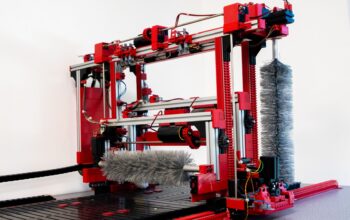
autonomous factories funding is gaining momentum as Foundry successfully raises $100 million. This significant investment highlights the growing interest in AI-driven manufacturing solutions.
What Are Autonomous Factories?
Autonomous factories represent a significant advancement in manufacturing technology, combining automation, artificial intelligence, and data analytics to streamline production processes. These facilities operate with minimal human intervention, utilizing smart machinery and advanced software to enhance efficiency, reduce costs, and improve product quality.
Key features of autonomous factories include:
- Smart Robotics: Automated robots perform repetitive tasks, allowing for higher precision and faster production rates.
- Real-time Data Processing: Sensors and IoT devices collect data that is analyzed in real-time, enabling quick adjustments and predictive maintenance.
- Flexible Manufacturing Systems: These systems can easily adapt to changing production demands, allowing for a diverse range of products to be manufactured without significant downtime.
- Sustainability: Autonomous factories often incorporate eco-friendly practices, minimizing waste and energy consumption.
The surge in interest and investment in autonomous factories funding is driven by the promise of increased productivity and competitive advantage in the global market. As companies recognize the potential for significant returns on investment, the landscape of manufacturing is poised for transformation.
The Impact of AI on Manufacturing
The integration of artificial intelligence (AI) in manufacturing processes has significantly transformed the landscape of production. Autonomous factories, driven by advanced AI technologies, are proving to be more efficient and cost-effective, attracting substantial funding in the industry.
One of the most notable impacts of AI on manufacturing is the enhancement of operational efficiency. With AI algorithms analyzing vast amounts of data, autonomous factories can optimize production schedules, reduce downtime, and minimize waste. This capability not only leads to cost savings but also improves the overall quality of products.
Furthermore, the implementation of AI-powered robotics in these factories has revolutionized labor dynamics. Robots can perform repetitive tasks with precision, allowing human workers to focus on more complex and creative roles. This shift not only increases productivity but also fosters innovation within the workforce.
As companies recognize the potential of autonomous factories, funding opportunities are on the rise. Investors are increasingly keen to support initiatives that leverage AI for manufacturing improvements. The influx of capital is essential for developing cutting-edge technologies that will drive the future of production.
- Increased Efficiency: AI optimizes operations.
- Enhanced Quality: Data-driven decision-making.
- Labor Innovation: Shift towards creative tasks.
Foundry’s $100 Million Investment
Foundry, a leading tech company in the manufacturing sector, has announced a substantial $100 million investment aimed at enhancing its autonomous factories initiative. This funding is poised to revolutionize the way manufacturing processes are optimized, leveraging cutting-edge technology to streamline operations.
The investment will be allocated towards several key areas:
- Research and Development: A significant portion will focus on developing advanced AI systems that improve the efficiency and accuracy of production lines.
- Infrastructure Upgrades: Foundry plans to upgrade existing facilities with state-of-the-art robotics and automation technologies.
- Workforce Training: Ensuring employees are equipped with the necessary skills to operate and maintain these new autonomous systems will also be a priority.
This funding not only highlights Foundry’s commitment to innovation but also reflects a growing trend in the industry towards investing in autonomous factories. Experts suggest that such investments are crucial for companies looking to stay competitive in a rapidly evolving market. By embracing these technologies, Foundry aims to set a new benchmark for efficiency and productivity in manufacturing.
Future Trends in Autonomous Manufacturing
The landscape of manufacturing is rapidly evolving, with autonomous factories leading the charge. As industries increasingly adopt automation, several future trends are emerging that will shape the trajectory of autonomous manufacturing.
- Increased Investment: Funding for autonomous factories is expected to rise as companies recognize the potential for efficiency and cost savings. Venture capitalists are particularly interested in startups that focus on innovative automation technologies.
- Integration of AI and Machine Learning: The use of advanced algorithms will enable machines to learn from their environment and optimize production processes in real-time. This will lead to more adaptive and responsive manufacturing systems.
- Sustainability Initiatives: With growing concerns about environmental impact, future autonomous factories will likely prioritize sustainable practices. This includes minimizing waste and utilizing renewable energy sources.
- Customization and Flexibility: The shift towards personalized products will drive the need for flexible manufacturing systems. Autonomous factories will be designed to accommodate varying production demands without significant downtime.
As these trends unfold, the focus on autonomous factories funding will be critical to driving innovation and ensuring that manufacturers can adapt to the changing market landscape.
Challenges Facing Autonomous Factories
The rise of autonomous factories has brought about significant advancements in manufacturing, but several challenges remain that can impact their successful implementation and funding. One major challenge is the high initial investment required to set up these advanced facilities. Companies often struggle to secure the necessary capital, resulting in a hesitancy to adopt autonomous technologies despite their long-term benefits.
Another issue is the integration of new technologies with existing systems. Many manufacturing plants operate on legacy systems that may not easily adapt to the demands of automation. This compatibility gap can lead to increased costs and extended timelines for transitioning to an autonomous model.
- Workforce Adaptation: The shift to autonomous factories necessitates a workforce skilled in managing and maintaining advanced technologies. Upskilling current employees or hiring new talent can be a daunting task.
- Regulatory Hurdles: Navigating complex regulations surrounding automation can create delays and additional costs, complicating the funding landscape for autonomous factories.
- Cybersecurity Risks: As factories become more connected, the potential for cyber threats increases, requiring substantial investment in security measures.
These challenges highlight the need for proactive strategies in securing autonomous factories funding to ensure successful implementation and sustainability in the future.
To maximize the potential of autonomous factories funding, companies must adopt innovative technologies that streamline production processes. Additionally, forming strategic partnerships can significantly enhance the effectiveness of autonomous factories funding initiatives.