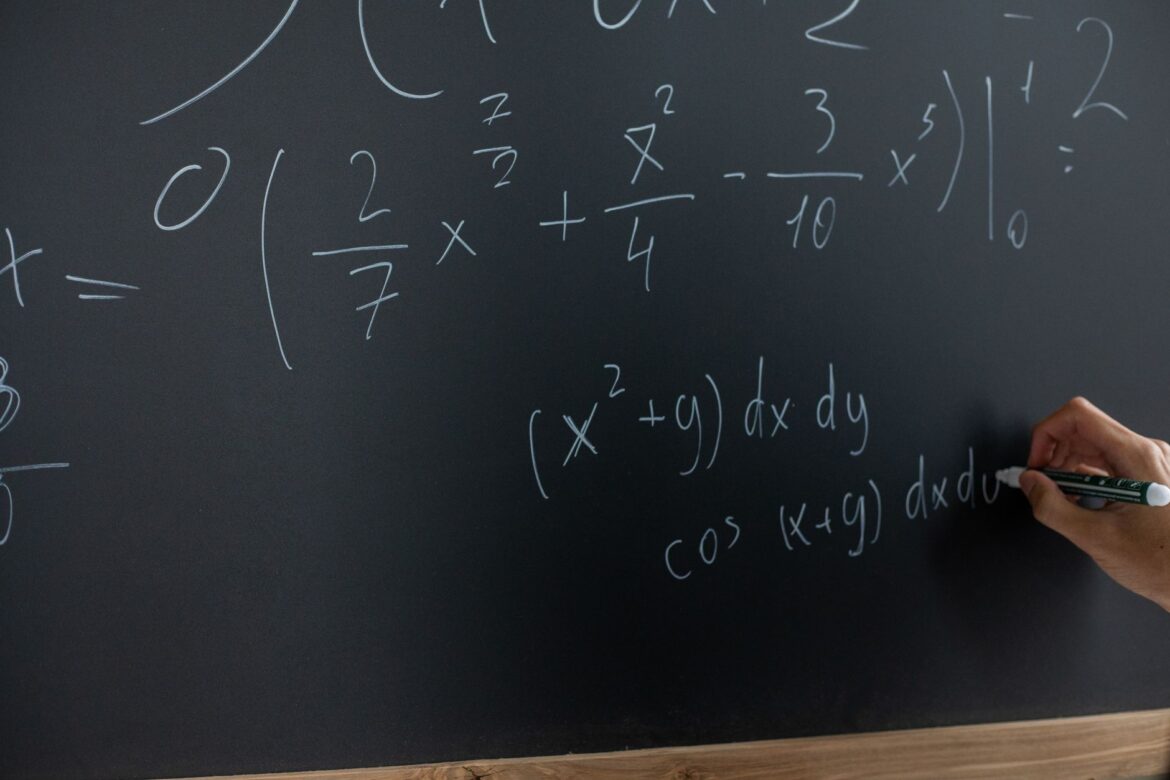
OpenAI math problems have been tackled by its latest model, which claims to have resolved over 100 complex equations. This achievement highlights the advancements in artificial intelligence and its applications in solving mathematical challenges.
Introduction to OpenAI’s Math Problem Solving
OpenAI has recently made headlines with the announcement that its advanced model has successfully resolved over 100 math problems. This achievement highlights the growing capabilities of artificial intelligence in tackling complex mathematical challenges. While specific details about the problems solved have not been disclosed, the implications of this development are significant for both educational and research sectors.
The ability of OpenAI’s model to solve such a diverse range of math problems raises questions about the future of AI in academia. Educators and students alike may benefit from tools that can provide instant solutions or explanations for challenging equations. Furthermore, this breakthrough could pave the way for enhanced learning experiences, allowing individuals to engage with math in a more interactive and supportive environment.
As AI continues to evolve, the potential applications for OpenAI’s math problem-solving capabilities could extend beyond the classroom. Industries that rely on complex calculations may also find innovative ways to integrate these advancements into their workflows.
- Enhancing student learning
- Supporting research initiatives
- Transforming industry practices
Overall, OpenAI’s progress in resolving math problems underscores the intersection of technology and education.
How the Model Works
The recent advancements in AI have led to significant improvements in the way models tackle complex challenges, particularly in the realm of mathematics. OpenAI’s latest model showcases its ability to solve a diverse range of math problems with impressive accuracy.
To understand how the model works, it is essential to consider several key components:
- Data Training: The model has been trained on a vast dataset that includes various math problems, providing it with a wealth of knowledge to draw upon.
- Algorithmic Approach: Utilizing advanced algorithms, the model breaks down problems into manageable steps, allowing it to arrive at solutions more efficiently.
- Contextual Understanding: Through natural language processing, the model interprets the context of each math problem, ensuring that it applies the correct methods to solve them.
- Iterative Learning: As the model interacts with new data, it continually refines its capabilities, enhancing its performance over time.
These elements combined make OpenAI’s math problem-solving model a robust tool for tackling over 100 distinct issues with remarkable precision.
Impact of AI on Mathematics
The impact of AI on mathematics has been profound, especially with the advent of models like those developed by OpenAI. These advancements not only enhance computational capabilities but also provide innovative solutions to complex mathematical problems.
One of the most significant breakthroughs has been in the domain of problem-solving. OpenAI’s model has demonstrated its ability to tackle over 100 math problems effectively, showcasing the potential for AI to revolutionize how we approach mathematical education and research.
Furthermore, the integration of AI in mathematics can:
- Enhance learning: Students can receive personalized assistance in solving math problems, improving their understanding.
- Increase efficiency: Researchers can analyze vast datasets and solve intricate problems more quickly than traditional methods.
- Encourage exploration: With AI aiding in problem-solving, mathematicians can focus on more abstract and theoretical concepts.
As the field continues to evolve, the collaboration between human mathematicians and AI models like those from OpenAI may lead to groundbreaking discoveries and new methodologies in mathematics.
Challenges Faced by AI Models
Despite the impressive achievements of OpenAI in addressing complex math problems, several challenges remain for AI models in this domain. These hurdles can significantly impact their performance and reliability.
- Understanding Context: Many math problems require a deep understanding of context and nuances that AI models often struggle to grasp. This can lead to misinterpretations of the problem, resulting in incorrect solutions.
- Complexity of Problems: As the difficulties of math problems increase, so do the challenges for AI models. OpenAI’s attempts to solve higher-order math problems reveal limitations in computational reasoning and abstract thinking.
- Generalization: While OpenAI’s model has successfully tackled over 100 math problems, the ability to generalize solutions across different types of problems remains a significant challenge. AI must not only learn from specific examples but also apply knowledge flexibly.
- Data Limitations: The quality and diversity of training data play a crucial role in an AI’s performance. Models trained on limited datasets may struggle with problems that deviate from the familiar patterns.
As OpenAI continues to refine its approach, overcoming these challenges will be essential for enhancing the effectiveness of AI in solving math problems.
Future of AI in Problem Solving
The future of AI in problem solving appears promising, particularly with advancements showcased in OpenAI math problems. As artificial intelligence continues to evolve, its ability to tackle complex mathematical challenges is becoming increasingly refined. The integration of AI into educational tools and resources is transforming how students and professionals approach math.
One of the key benefits of utilizing AI for problem solving is its capacity for personalization. Algorithms can analyze individual learning patterns and adapt instructions accordingly, providing tailored support to users. This could lead to improved outcomes in understanding and applying mathematical concepts.
Moreover, the potential for collaboration between humans and AI is vast. With AI models like OpenAI’s demonstrating proficiency in solving over 100 math problems, there is a growing opportunity to enhance human cognition. By leveraging the strengths of both parties, we can address more intricate issues that have historically posed challenges to learners and educators alike.
However, as we look to the future, it is essential to address ethical considerations and ensure that AI is used responsibly in educational settings. The journey of AI in mathematics is just beginning, and its implications are bound to reshape the educational landscape.
OpenAI’s Next Steps
As OpenAI continues to advance its capabilities in solving math problems, the organization is looking toward the future with a strategic approach. The success of their model in resolving over 100 math problems has opened up new avenues for research and development. According to sources, OpenAI plans to enhance its algorithms to improve accuracy and efficiency.
Key initiatives for the next steps include:
- Expanding Problem Types: OpenAI aims to broaden the range of mathematical problems its model can address, incorporating more complex and diverse challenges.
- Enhancing User Interaction: By refining how users engage with the AI, OpenAI seeks to make the process of solving math problems more intuitive and accessible.
- Collaborative Research: OpenAI is exploring partnerships with educational institutions to gather insights and feedback, ensuring that their model meets the needs of students and educators.
With these initiatives, OpenAI is poised to not only tackle more intricate problems but also to redefine the way math is approached in educational settings, leveraging their proven model to transform learning experiences.
The recent advancements in AI have significantly improved how we tackle OpenAI math problems. Researchers are now able to leverage this proven model to efficiently solve a wide range of OpenAI math problems.
Photo by Monstera Production on Pexels