
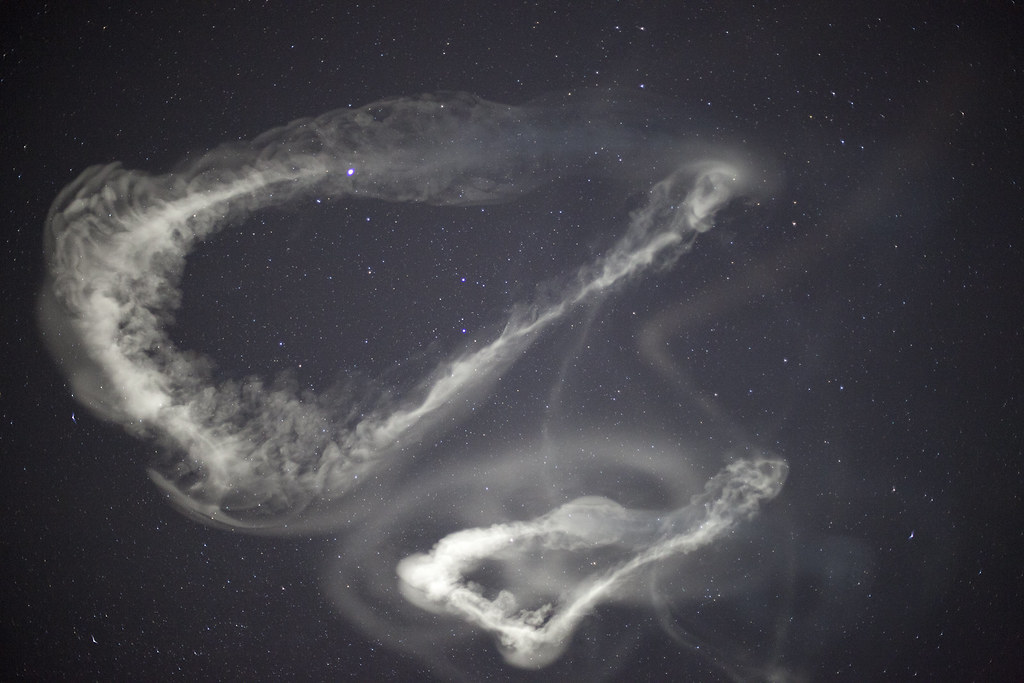
Space Jellyfish Rocket Launch has captured global attention after an unusual sighting in the skies over China. This event has raised questions and sparked discussions.
What Are Space Jellyfish?
Space jellyfish are a fascinating phenomenon that emerged following the recent Space Jellyfish Rocket Launch in China. These luminous formations are not actual jellyfish, but rather are the result of the rocket’s exhaust interacting with the atmosphere, creating ethereal, jellyfish-like shapes in the sky.
The phenomenon has captured the imagination of many, leading to extensive discussion and speculation about their nature and implications. Observers reported seeing these glowing entities drift gracefully, illuminating the night sky and providing a stunning visual spectacle.
Experts explain that the appearance of space jellyfish is linked to specific atmospheric conditions and the type of fuel used in rocket launches. The interaction of exhaust particles with moisture in the air can create these unusual visual effects.
As the Space Jellyfish Rocket Launch garnered attention, scientists and enthusiasts alike were left eager to understand more about these mysterious aerial displays and their significance in the context of space exploration.
Overview of the Rocket Launch
The recent Space Jellyfish Rocket Launch has captured the attention of space enthusiasts and scientists alike. This unprecedented event took place in China, where the unique appearance of the rocket and its luminous trail led to comparisons with jellyfish gliding through the cosmos.
During the launch, several key aspects were highlighted:
- Launch Location: The rocket was launched from a state-of-the-art facility in southern China, specifically designed for such innovative projects.
- Mission Objectives: The primary goal was to deploy satellites that enhance communication technology and Earth observation capabilities.
- Public Reaction: Spectators were left in awe, with many sharing videos and images of the launch on social media platforms.
- Scientific Significance: Experts believe that the data collected from this mission will provide valuable insights into atmospheric conditions and space travel.
As the world reflects on this remarkable Space Jellyfish Rocket Launch, the implications for future space exploration continue to unfold.
Public Reactions to the Event
The recent Space Jellyfish Rocket Launch has garnered a wide array of public reactions, ranging from excitement to skepticism. Many spectators were left in awe as they witnessed the launch, describing the sight as mesmerizing and surreal. Social media platforms buzzed with videos and images capturing the stunning visual of the rocket’s ascent intertwined with the ethereal jellyfish-like shapes produced by the launch.
However, not all reactions were positive. Some questioned the environmental impact of such launches, expressing concerns about the debris left in the atmosphere. A vocal segment of the public also raised inquiries regarding the purpose and safety of the mission.
In various online forums, enthusiasts and critics alike engaged in discussions, highlighting the significance of the event in advancing space exploration. While many celebrated the innovative aspects of the Space Jellyfish Rocket Launch, others called for more transparency in the space industry.
Overall, the event has sparked a nationwide conversation about the future of space travel and its implications for humanity.
Scientific Explanations for the Phenomenon
The recent Space Jellyfish Rocket Launch has captivated scientists and enthusiasts alike, prompting a deeper look into the phenomenon observed in the skies. The term “space jellyfish” refers to the unique visual display created by the rocket’s exhaust plumes, which take on a jellyfish-like appearance as they expand and disperse in the atmosphere.
Experts explain that this intriguing sight is the result of a combination of factors:
- Rocket Propulsion: The powerful thrust of the rocket creates significant turbulence, causing the exhaust gases to swirl and form intricate shapes.
- Atmospheric Conditions: Variations in temperature and humidity can influence how the gases interact with the surrounding air, contributing to the phenomenon.
- Light Refraction: The sunlight catching the particles in the plume enhances the ethereal quality of the display, making it resemble bioluminescent jellyfish.
Such scientific explanations not only enhance our understanding of the Space Jellyfish Rocket Launch but also spark curiosity about future launches and their potential to create similar stunning visuals.
Historical Context of Similar Sightings
The phenomenon of “Space Jellyfish” has intrigued both scientists and the public for decades, often sparking discussions about unidentified aerial objects. Similar sightings have been documented throughout history, particularly during significant rocket launches.
One notable event occurred in 1990, when a rocket launch in the United States resulted in a similar display. Witnesses described unusual luminescent formations that resembled jellyfish, leading to widespread speculation about their origin.
In 2015, a similar occurrence was reported following a launch in India, where bright, pulsating lights were captured in the night sky. These events have often been attributed to the release of rocket exhaust and atmospheric conditions, yet they continue to captivate imaginations.
As the recent Space Jellyfish Rocket Launch unfolded, many observers drew parallels to these historical sightings, highlighting a recurring theme of fascination and mystery surrounding human exploration of space.
- 1990 US rocket launch sighting
- 2015 Indian rocket launch phenomenon
Future Implications for Space Research
The recent Space Jellyfish Rocket Launch has opened new avenues for understanding atmospheric phenomena and their implications for future space research. As scientists study the luminous displays created by the launch, they are uncovering vital data about the interactions between rocket emissions and atmospheric conditions.
Experts believe that the insights gained from this event may lead to advancements in several key areas:
- Atmospheric Science: Improved modeling of atmospheric reactions to rocket launches, enhancing safety protocols.
- Space Exploration: A better understanding of how rocket emissions affect the environment could influence future mission designs.
- Public Engagement: The fascination with phenomena like space jellyfish encourages wider interest in space science among the public.
As researchers continue to analyze the data from the Space Jellyfish Rocket Launch, the potential for groundbreaking discoveries remains significant, paving the way for innovative approaches in the field of space research.
Expert Opinions on the Rocket Launch
Experts from various fields have shared their insights regarding the recent Space Jellyfish Rocket Launch, shedding light on both its scientific and cultural implications.
- Dr. Emily Chen, an astrophysicist, stated, “The phenomenon observed post-launch raises intriguing questions about atmospheric interactions and rocket emissions.”
- Professor Mark Reynolds, a cultural studies expert, noted, “The public’s fascination with ‘space jellyfish’ reflects a growing interest in space exploration and its mysteries.”
- Dr. Sarah Patel, an environmental scientist, emphasized, “Understanding the ecological impact of rocket launches is crucial for future missions.”
- Engineer Tom Wu commented, “This launch showcases advancements in rocket technology, making it possible to observe new atmospheric effects.”
As discussions continue, experts agree that the Space Jellyfish Rocket Launch could signal a new era in both space research and public engagement with scientific phenomena.
Conclusion: What We Learned
In conclusion, the Space Jellyfish Rocket Launch has provided a wealth of insights into both public fascination and scientific inquiry. This unprecedented event captured the imagination of people around the globe, highlighting the intersection of space exploration and artful phenomena. As we dissect the implications of the launch, several key takeaways emerge:
- Public Engagement: The striking visuals associated with the launch fostered a renewed interest in space science among the general public.
- Scientific Curiosity: Researchers are eager to study the atmospheric conditions that led to the jellyfish-like appearance, with plans to investigate further.
- Future Research: The event may pave the way for enhanced rocket launches and better understanding of atmospheric phenomena.
- Global Collaboration: The international response suggests a growing desire for collaboration in space research and exploration.
Ultimately, the Space Jellyfish Rocket Launch serves as a reminder of the beauty and mystery that exists in our universe, inspiring future generations of scientists and explorers.
By NASA Goddard Photo and Video via Openverse