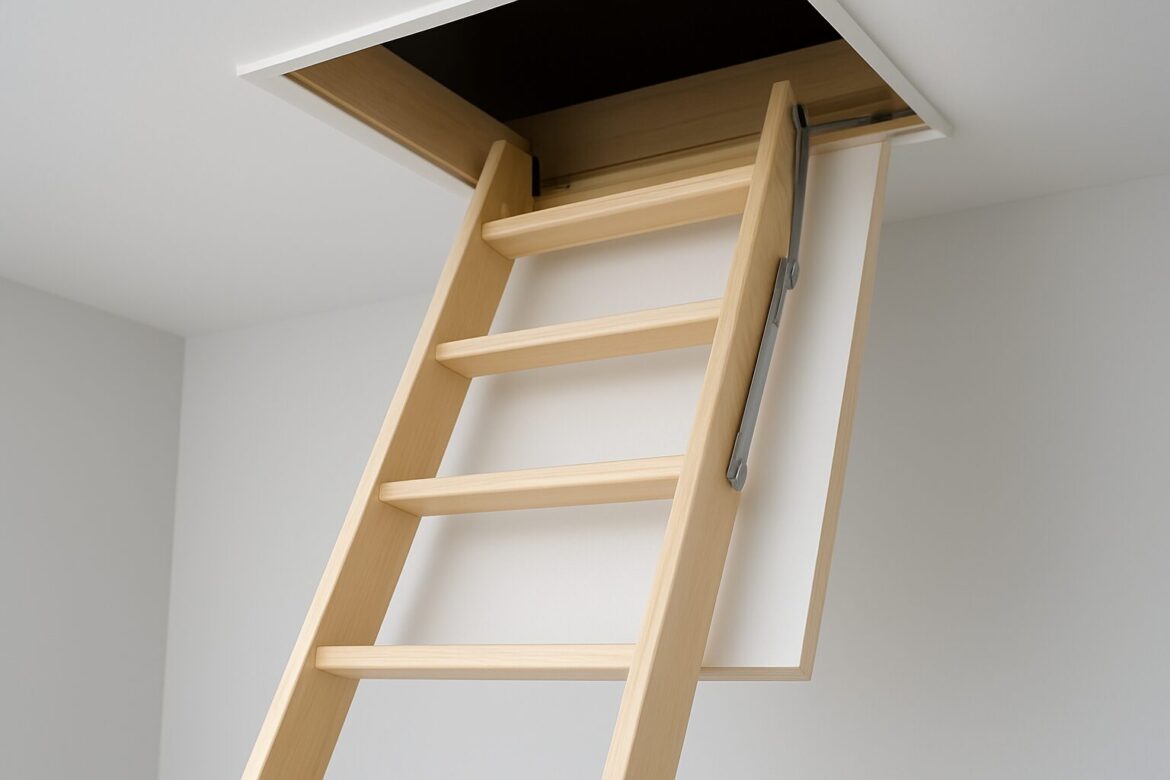
Why is efficient loft access important in modern properties?
Modern residential design places considerable emphasis on practical storage, flexible layouts and uncluttered interiors. Loft areas can accommodate items that are not needed every day, but difficult access often prevents households from using this space effectively. A well-planned Loft Ladder installation can provide convenient access without dedicating a permanent section of the room to a staircase.
For flats, terraced houses and compact family homes, the main objective is to make existing space more useful while maintaining safe movement throughout the property.
Which measurements matter before buying?
Accurate measurements help determine whether a proposed ladder will operate correctly. Start with the vertical distance between the floor and the loft opening. Then measure the hatch length and width, available landing space and clearance around nearby walls or furniture.
The extended ladder footprint deserves particular attention. A product may fit inside the loft opening but require additional floor space when opened. Checking the complete operating area prevents unexpected obstructions after installation.
Homeowners should also consider ceiling construction and the position of supporting joists. Altering structural components without appropriate assessment can create unnecessary risks and additional expense.
What are the differences between folding and telescopic models?
Folding models generally consist of connected sections that collapse for storage above the hatch. They are suitable for many conventional domestic layouts where sufficient room exists for the sections to unfold.
Telescopic models retract into shorter sections, potentially offering a compact storage arrangement. Sliding designs extend along a guided mechanism and may suit openings with appropriate clearance.
No single design is suitable for every property. Selection should reflect ceiling height, hatch configuration, operating frequency, user capability and the manufacturer’s installation requirements.
Can a compact system support regular loft use?
Yes, provided the chosen equipment is designed for the intended frequency of use. A loft used only for Christmas decorations has different practical requirements from one accessed several times each week for household supplies.
Repeated operation places demands on hinges, joints, locking components and fixing points. Product durability, stated load capacity and availability of replacement components therefore deserve attention during the selection process.
Homeowners should avoid choosing a model solely because it has the lowest purchase price. Long-term suitability depends on reliable operation, correct installation and manageable maintenance requirements.
Which statistics help compare different products?
Rather than relying on broad industry averages, compare measurable product specifications. Useful figures include maximum supported load, closed dimensions, extended length, hatch compatibility and the manufacturer’s stated installation clearances.
A simple comparison can identify differences between otherwise similar models. For example, two ladders may accommodate the same ceiling height but require different amounts of floor clearance. Recording the figures together makes the final decision more objective.
These measurements should come from product documentation rather than assumptions based on appearance.
How can installation improve everyday convenience?
An appropriately positioned hatch can reduce the effort involved in retrieving stored belongings. Clear access routes, dependable locking mechanisms and manageable operating controls make the space easier to use.
Lighting is another practical consideration. Adequate illumination near the hatch and inside the loft helps users identify obstacles and handle stored items more safely. Heavy belongings should be positioned carefully to avoid unnecessary lifting or unstable loads.
What safety measures should be included?
Check the manufacturer’s instructions, load limits, fixing requirements and inspection recommendations. Ensure the ladder is firmly secured, fully engaged before use and free from visible damage.
A qualified installer can assess structural suitability, hatch positioning and potential obstructions. Handrails or other supporting features should be considered where available and appropriate for the chosen design.
Children should not be allowed to operate the ladder unsupervised, and the area beneath the opening should remain clear during use.
How can homeowners protect their investment?
Routine checks can reveal loose fittings, damaged treads, worn hinges or problems with the opening mechanism. Keep moving components clean and follow the maintenance schedule supplied with the product.
Selecting a suitable design, verifying measurements and arranging correct installation can make compact loft access a lasting improvement. With careful planning, households can increase storage convenience without compromising the flexibility of their living areas.
Key Takeaways
- Efficient loft access allows households to utilize storage space effectively by providing convenient access without permanent staircase installations.
- Accurate measurements including the vertical distance to the loft opening and hatch dimensions are crucial to ensure proper ladder operation.
- Folding and telescopic ladder models differ in storage solutions and suitability based on ceiling height and hatch configuration.
- Durability and load capacity of the chosen loft ladder are important factors, especially for systems intended for frequent use.
- Proper installation and safety measures such as secure fastening and the absence of visible damage are essential for safe loft access.
- Regular maintenance checks can help preserve the functionality and longevity of loft access systems.